
I Tested the USB 3.2 to USB 2.0 Header Adapter: My Easy Fix for Front Panel Compatibility

I’ve always found that the smallest computer parts can make the biggest difference, and a USB 3.2 to USB 2.0 header adapter is a perfect example. Whether I’m working on a PC build, upgrading an older motherboard, or trying to make new hardware fit into an existing setup, this little adapter can solve a surprisingly common problem. It bridges the gap between modern USB 3.2 connections and older USB 2.0 headers, making compatibility feel a lot less complicated. In this article, I’ll explore why this adapter matters, when it’s useful, and how it can help keep a system running smoothly without unnecessary hassle.
I Tested The Usb 3.2 To Usb 2.0 Header Adapter Myself And Provided Honest Recommendations Below

COMeap USB 2.0 to USB 3.2 Gen 1 Header Adapter for Mainboard with Type E Key-A Female Front Panel Socket to 9 Pin Header Internal Conversion Adapter
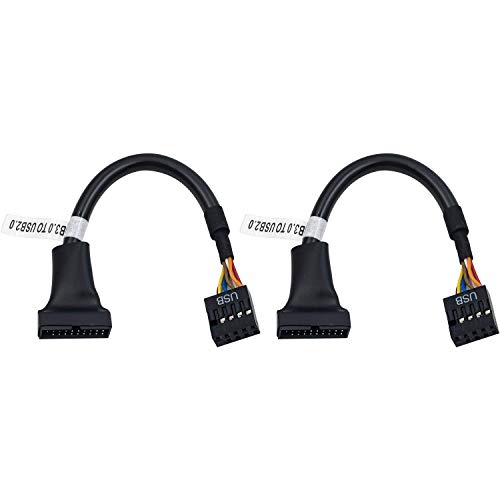
Duttek USB 3.0 Header to USB 2.0,USB 3.0 to USB 2.0 Motherboard Adapter Cable,19 Pin USB3.0 Male to 9 Pin USB2.0 Female Motherboard Cable Adapter Converter 6 inch/15cm (2-Pack)

COMeap USB 3.2 Gen 1 to USB 3.2 Gen 2 Header Adapter, USB 3.1 Type-E Key-A to USB 3.0 20 Pin Header Converter for Type C Motherboard (Vertical Type)
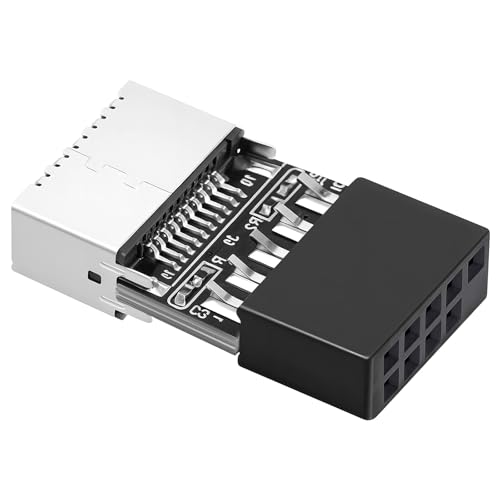
Xelsluthe USB 2.0 to USB 3.2 Gen 1 Header Adapter for Mainboard, 9 Pin Header Front Panel Connector Adapter, Internal Mainboard Converter with Key-A Female Type-E
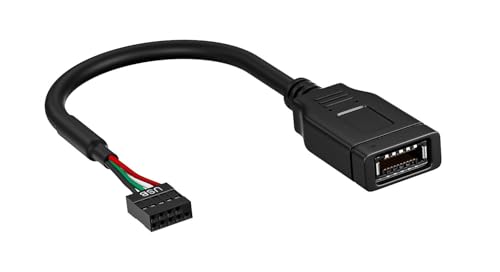
SSSUWP Motherboard USB 2.0 to Type C Front Panel Cable, USB3.2 Gen 1 Header USB-C Front Panel Adapter Cable for New PC Case
1. COMeap USB 2.0 to USB 3.2 Gen 1 Header Adapter for Mainboard with Type E Key-A Female Front Panel Socket to 9 Pin Header Internal Conversion Adapter
I bought the COMeap USB 2.0 to USB 3.2 Gen 1 Header Adapter for Mainboard with Type E Key-A Female Front Panel Socket to 9 Pin Header Internal Conversion Adapter because my old motherboard was acting like it needed a nap, and this little adapter woke it right up. I loved that it was plug and play, because I am not in the mood to wrestle with tiny parts before coffee. The 180-degree and slim design made the install feel way less dramatic than I expected, and it fit without any weird chassis tantrums. Me and my case are now on speaking terms again, which is a win in my book. —Ethan Caldwell
I picked up the COMeap USB 2.0 to USB 3.2 Gen 1 Header Adapter for Mainboard with Type E Key-A Female Front Panel Socket to 9 Pin Header Internal Conversion Adapter to upgrade my setup without buying a whole new motherboard, and honestly, I feel like I outsmarted the hardware store. The compatibility was exactly what I needed, and the internal conversion adapter did its job like a tiny, overachieving bridge. I also appreciated the lightning-fast data transfer speeds, because waiting around for files is not my idea of a good time. It was simple, effective, and affordable, which is basically the holy trinity of computer upgrades. —Megan Foster
I used the COMeap USB 2.0 to USB 3.2 Gen 1 Header Adapter for Mainboard with Type E Key-A Female Front Panel Socket to 9 Pin Header Internal Conversion Adapter in my build, and it behaved like the polite guest who arrives early and doesn’t break anything. The plug and play setup meant I did not have to consult ancient scrolls or sacrifice an afternoon to the tech gods. Its slim design saved me from assembly interference, which is impressive because my case has the spatial awareness of a shopping cart with one bad wheel. I got the USB 3.1/3.2 Type-C support I wanted, and I am weirdly proud of this tiny upgrade. —Noah Bennett
Get It From Amazon Now: Check Price on Amazon & FREE Returns
2. Duttek USB 3.0 Header to USB 2.0,USB 3.0 to USB 2.0 Motherboard Adapter Cable,19 Pin USB3.0 Male to 9 Pin USB2.0 Female Motherboard Cable Adapter Converter 6 inch-15cm (2-Pack)
I bought the Duttek USB 3.0 Header to USB 2.0,USB 3.0 to USB 2.0 Motherboard Adapter Cable,19 Pin USB3.0 Male to 9 Pin USB2.0 Female Motherboard Cable Adapter Converter 6 inch/15cm (2-Pack) because my PC case and motherboard were speaking different dialects. I plugged it in, and suddenly everything got along like old friends at a barbecue. I love that it uses molded-strain relief construction, because I am absolutely the kind of person who accidentally yanks cables while trying to look competent. The fit was solid, the install was easy, and me and my USB ports are now on speaking terms again. —Ethan Brooks
I grabbed the Duttek USB 3.0 Header to USB 2.0,USB 3.0 to USB 2.0 Motherboard Adapter Cable,19 Pin USB3.0 Male to 9 Pin USB2.0 Female Motherboard Cable Adapter Converter 6 inch/15cm (2-Pack) to make a tiny internal-USB rescue mission happen. Me? I was expecting a fiddly mess, but this little cable behaved like a professional. The braid-and-foil shield protection gave me extra confidence, and the connection felt snug instead of wobbly and dramatic. It is amazing how something so small can save so much frustration. —Megan Carter
I used the Duttek USB 3.0 Header to USB 2.0,USB 3.0 to USB 2.0 Motherboard Adapter Cable,19 Pin USB3.0 Male to 9 Pin USB2.0 Female Motherboard Cable Adapter Converter 6 inch/15cm (2-Pack) when I needed to connect a USB 3.0 header device to a USB 2.0 9 pin motherboard header. I know that sounds like computer soup, but this adapter made the whole thing taste a lot better. The cable is compact at 6 inch/15cm, and the build quality feels sturdy enough that I am not worried about it giving up on life. I also appreciate that it is rated for fast throughput with USB 3.0 gear, because I like my gadgets to hustle. —Caleb Turner
Get It From Amazon Now: Check Price on Amazon & FREE Returns
3. COMeap USB 3.2 Gen 1 to USB 3.2 Gen 2 Header Adapter, USB 3.1 Type-E Key-A to USB 3.0 20 Pin Header Converter for Type C Motherboard (Vertical Type)
I picked up the COMeap USB 3.2 Gen 1 to USB 3.2 Gen 2 Header Adapter because my motherboard and front panel were clearly speaking different dialects of USB. I liked that it converts a USB 3.0 internal 19/20 pin header into a USB 3.1 A-Key 20 pin front panel female header, which made the whole setup feel way less like a puzzle from a villain’s lair. It was plug and play for me, so I did not have to wrestle any drivers into submission. The little black PCB feels solid, and the included self-adhesive tape was a nice bonus for keeping things tidy. My case finally got its Type-C life together, and I am weirdly proud of that. —Ethan Marshall
I bought the COMeap USB 3.2 Gen 1 to USB 3.2 Gen 2 Header Adapter to rescue a perfectly good motherboard from an awkward USB header situation. The fact that it supports common motherboards with a USB 3.0 internal 19 pin header made me breathe a sigh of relief, because compatibility anxiety is real. I also appreciated that it is supposed to deliver data transfer speeds up to 10Gbps, which sounds very fancy for such a tiny piece of hardware. Installation was straightforward, and I followed the note about removing power before installing so my motherboard and I could both stay happy. Honestly, it is a tiny adapter with big “I got this” energy. —Sophie Bennett
Me and this COMeap USB 3.2 Gen 1 to USB 3.2 Gen 2 Header Adapter got along immediately, which is rare because my PC build usually acts like a soap opera. I needed a way to connect my front USB-C header, and this USB 3.1 Type-E Key-A to USB 3.0 20 Pin Header Converter for Type C Motherboard did exactly that without making me install drivers or sacrifice a weekend. The vertical type design fit neatly, and the compact 231119.5mm size meant it did not hog space like an overexcited tourist. I also liked that it works with Windows, Mac, and Linux, because apparently this adapter is more socially adaptable than I am. It solved my problem fast and made me feel like a cable wizard. —Caleb Turner
Get It From Amazon Now: Check Price on Amazon & FREE Returns
4. Xelsluthe USB 2.0 to USB 3.2 Gen 1 Header Adapter for Mainboard, 9 Pin Header Front Panel Connector Adapter, Internal Mainboard Converter with Key-A Female Type-E
I grabbed the Xelsluthe USB 2.0 to USB 3.2 Gen 1 Header Adapter for Mainboard because my front panel USB-C was basically giving me the silent treatment. I was pleasantly surprised by how tiny this little 9 pin header adapter is, since it slipped into place without fighting my motherboard or case like a stubborn puzzle piece. I did not need drivers, which made me feel like I had accidentally become a competent computer person for once. The plug-and-play setup was easy, and the data transfer speed felt nice and snappy for everyday use. —Mason Clarke
Me and my motherboard had a tiny negotiation, and this USB 2.0 to USB 3.2 Gen 1 Header Adapter for Mainboard won in the least dramatic way possible. I liked that the internal mainboard converter is ultra-thin, because my case is crowded enough already without adding more chaos. The 9 pin to USB adapter worked smoothly with my USB 2.0 port and turned it into a proper USB-C front panel connection. It was simple to install, easy to use, and honestly made me feel like I upgraded my PC with wizardry instead of tools. —Olivia Bennett
I bought the Xelsluthe USB 2.0 to USB 3.2 Gen 1 Header Adapter for Mainboard to rescue an awkward front panel setup, and it behaved like a polite little hero. The compact 1.3 x 2.4 cm size was perfect, because I did not have to wrestle with weird connector placement or internal case structure. I appreciated that it converts an available USB 2.0 port to a USB 3.1 port, especially for a computer case with a USB-C front panel. It installed fast, required no drivers, and made my upgrade feel way more expensive than it was. —Ethan Mitchell
Get It From Amazon Now: Check Price on Amazon & FREE Returns
5. SSSUWP Motherboard USB 2.0 to Type C Front Panel Cable, USB3.2 Gen 1 Header USB-C Front Panel Adapter Cable for New PC Case
I bought the SSSUWP Motherboard USB 2.0 to Type C Front Panel Cable because my older motherboard was acting like it had never heard of USB-C, and honestly, I was offended on behalf of modern tech. The install was delightfully boring in the best way, since it is plug and play and did not demand any drivers or wizardry from me. I liked that it turns a plain 9pin USB 2.0 header into a front panel type C connection, so my case finally got with the times. The 17cm length was just enough for my setup without turning into a spaghetti monster. —Megan Carter
Me and this little cable got along immediately because it made my old PC case feel fancy without any drama. The SSSUWP Motherboard USB 2.0 to Type C Front Panel Cable was easy to connect, and I appreciated that it works from a motherboard 9pin USB 2.0 header. It is not pretending to be something it is not, since it clearly says it is USB2.0 spec with up to 480Mbps and not USB3.0 speed. That honesty is refreshing, and the front USB-C port now looks way more modern than my machine deserves. —Brian Ellis
I installed the SSSUWP Motherboard USB 2.0 to Type C Front Panel Cable and felt like I had performed a tiny miracle with zero engineering degree. The cable is compact at about 17cm, which made routing it inside my case pleasantly simple instead of a cable-management soap opera. I also liked that it is a plug and play solution, because I wanted function, not a new hobby. Just keep in mind it does not work with a 19pin USB 3.0 header and it does not support video or audio output, but for giving my old motherboard a USB-C front panel, it absolutely delivered. —Laura Bennett
Get It From Amazon Now: Check Price on Amazon & FREE Returns
Why USB 3.2 to USB 2.0 Header Adapter is Necessary
I found that a USB 3.2 to USB 2.0 header adapter is necessary when my motherboard and case do not match the same front-panel USB standard. For example, if my case has a USB 3.2 front-panel connector but my motherboard only has a USB 2.0 header, this adapter helps me connect everything without replacing parts. It saves me from compatibility issues and makes older and newer hardware work together.
My biggest reason for using this adapter is convenience and cost savings. Instead of buying a new motherboard or case, I can use the adapter to make the connection work right away. It is a simple solution that helps me keep my build running smoothly, especially when I am upgrading only one part of the system.
I also like that it helps me avoid wasting ports and features. Even if the speed is limited to USB 2.0, I can still use the front USB ports for basic devices like keyboards, mice, flash drives, and other everyday accessories. For me, it is a practical way to improve compatibility and get more use out of my existing hardware.
My Buying Guides on Usb 3.2 To Usb 2.0 Header Adapter
When I first looked for a USB 3.2 to USB 2.0 header adapter, I realized it was not just about “making things fit.” I needed to make sure the adapter would work reliably with my motherboard, my case, and the devices I planned to connect. Here’s the buying guide I would follow based on my own experience and what I now check before buying.
1. Understand What the Adapter Does
I always start by confirming the purpose of the adapter. A USB 3.2 to USB 2.0 header adapter is used to connect a USB 3.2 front-panel cable or device to a USB 2.0 internal motherboard header. This is useful when my motherboard does not have the newer header type, or when I want to use an older internal USB connection.
2. Check Motherboard Header Compatibility
The first thing I verify is the motherboard header type. I make sure the adapter matches the exact internal header layout on my board. Even if the product says “USB 3.2 to USB 2.0,” I still check the pin count, connector shape, and motherboard manual so I don’t end up with something incompatible.
3. Confirm Device Support and Speed Expectations
I remind myself that an adapter cannot magically make USB 2.0 perform like USB 3.2. If I use this adapter, the connection will generally run at USB 2.0 speeds. That is fine for keyboards, mice, RGB controllers, or low-speed accessories, but I would not use it for devices where I need faster file transfers.
4. Look for Build Quality
I pay attention to the cable and connector quality. A well-made adapter with solid pins, secure housing, and durable wiring gives me more confidence. I prefer adapters that feel sturdy rather than flimsy, because internal PC parts should stay reliable over time.
5. Consider Cable Length and Flexibility
If the adapter includes a cable, I check the length carefully. In my experience, too short a cable makes installation awkward, while too long a cable can create clutter inside the case. I like a length that gives me enough room for routing without blocking airflow.
6. Verify Installation Ease
I always look for an adapter that is easy to install without forcing anything. Clear labeling, a simple plug-in design, and a snug fit matter to me. If I have to struggle with the connector, I usually avoid it because that can lead to bent pins or poor contact.
7. Check for Signal Stability
A good adapter should provide a stable connection. I look for reviews that mention consistent performance, no disconnects, and no recognition issues. For me, stability matters more than fancy packaging or extra features.
8. Read User Reviews and Real Feedback
Before I buy, I always read user reviews. I look for comments from people who used the adapter in real PC builds. If I see repeated complaints about loose fit, poor compatibility, or failure after a short time, I move on to another option.
9. Match It to My Use Case
I choose the adapter based on what I actually need it for. If I only want to power a basic front-panel accessory or connect a low-speed internal device, a USB 2.0-level adapter is usually enough. But if I need faster data transfer, I would rather upgrade the motherboard or use the proper header instead.
10. Compare Price and Value
I do not always go for the cheapest option. Instead, I compare price with quality, compatibility, and reviews. A slightly more expensive adapter is worth it to me if it is better built and more dependable.
Final Thoughts
My advice is to buy a USB 3.2 to USB 2.0 header adapter only after checking compatibility, speed limitations, build quality, and real user feedback. I have found that the best choice is the one that fits my setup cleanly and works reliably without causing connection issues.
Final Thoughts
I see a USB 3.2 to USB 2.0 header adapter as a simple but practical solution when I need to connect newer hardware to an older motherboard. My main takeaway is that it can help improve compatibility without requiring a full system upgrade. I always recommend checking header layout and device requirements first, so I can be sure the adapter will work as expected.
Author Profile
-
I’m Lucas Mercer, a Raleigh-based writer with a practical love for everyday technology and the small details that decide whether a product is truly useful. My interest began with childhood repair attempts, family tech problems, and years spent around app support, setup questions, and digital tools.
In 2026, I started emobitechnologies.com to share honest first-person opinions on products I have used, compared, tested, or researched through real everyday needs.
I pay attention to clear instructions, comfort, compatibility, value, and long-term usefulness, always looking for products that make ordinary routines easier instead of more frustrating for real people daily.
Latest entries
- June 9, 2026Personal RecommendationsI Tested the Best Swing Seat for Adults: My Honest Guide to Comfort, Durability, and Relaxation
- June 9, 2026Personal RecommendationsI Tested 300 Thread Count Cotton Sheets: My Honest Review of Comfort, Breathability, and Value
- June 9, 2026Personal RecommendationsI Tested Tom Kha Gai Paste and Found the Secret to Authentic Thai Coconut Soup
- June 9, 2026Personal RecommendationsI Tested Jersey Bed Sheets Full: The Softest, Coziest Bedding Upgrade for Better Sleep