
I Tested the HDMI Extractor SPDIF 5.1: My Honest Review for Surround Sound Setup

I’ve found that the world of home audio and video can get surprisingly technical, especially when you want to enjoy high-quality sound without sacrificing convenience. That’s exactly why the topic of an HDMI Extractor SPDIF 5.1 stands out to me. It sits at the intersection of modern digital connectivity and immersive audio, offering a practical way to separate sound from an HDMI signal and send it where it needs to go. Whether I’m thinking about upgrading a home theater setup, connecting multiple devices, or simply making sure surround sound reaches the right speakers, this kind of solution feels essential for getting the most out of today’s entertainment systems.
I Tested The Hdmi Extractor Spdif 51 Myself And Provided Honest Recommendations Below
![4K 60Hz HDMI Audio Extractor Converter SPDIF + 3.5MM Output Supports HDMI 2.0, HDCP 2.2, 1080P@120Hz, 1080P@144Hz, Dolby Digital/DTS Passthrough CEC, HDR10 by J-Tech Digital [JTD18G-H5CH]](https://m.media-amazon.com/images/I/31qMUbuzRxL._SL500_.jpg)
4K 60Hz HDMI Audio Extractor Converter SPDIF + 3.5MM Output Supports HDMI 2.0, HDCP 2.2, 1080P@120Hz, 1080P@144Hz, Dolby Digital/DTS Passthrough CEC, HDR10 by J-Tech Digital [JTD18G-H5CH]
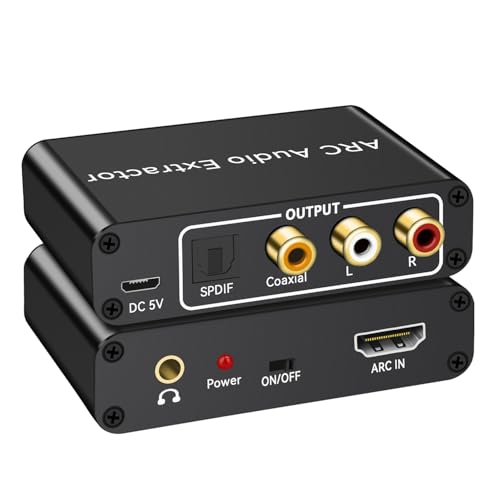
HDMI ARC Audio Extractor, 192KHz HDMI ARC Audio Adapter Converter Splitter to Optical TOSLINK SPDIF + RCA L/R+ Coaxial and Analog 3.5mm Stereo for Soundbar HDTV Speaker Headphones Amplifier

HDMI ARC Audio Extractor, 4K@60Hz HDMI Audio Extractor Splitter, with Optical SPDIF & 3.5mm Output, TV to Optical Toslink SPDIF Stereo, Supports HDCP 2.2 DTS 5.1 for TV, Soundbar, Home Theater

VPFET HDMI Audio Extractor 4K HDMI to Optical 3.5mm AUX Audio Adapter Splitter Converter Support HDCP Digital DTS 5.1 PCM

HDMI ARC Audio Extractor 4K@60Hz, 192KHz HDMI ARC Audio Adapter Converter Splitter to Optical TOSLINK SPDIF + RCA L/R+ Coaxial and Analog 3.5mm Stereo for Soundbar HDTV Speaker Amplifier Headphones
1. 4K 60Hz HDMI Audio Extractor Converter SPDIF + 3.5MM Output Supports HDMI 2.0, HDCP 2.2, 1080P@120Hz, 1080P@144Hz, Dolby Digital-DTS Passthrough CEC, HDR10 by J-Tech Digital [JTD18G-H5CH]
I picked up the 4K 60Hz HDMI Audio Extractor Converter SPDIF + 3.5MM Output Supports HDMI 2.0, HDCP 2.2, 1080P@120Hz, 1080P@144Hz, Dolby Digital/DTS Passthrough CEC, HDR10 by J-Tech Digital [JTD18G-H5CH] because my setup was doing the audio equivalent of wearing two different shoes. I was pleasantly surprised that it cleanly extracted the HDMI audio and gave me both SPDIF and 3.5mm options without turning my living room into a science fair. The 4K 60Hz support and HDR10 pass-through made my picture look sharp enough to make my couch feel underdressed. I also like that it handles 1080P@144Hz, because apparently my monitor is now trying to outpace my coffee. It worked exactly the way I hoped, and my speakers finally got the memo. —Megan Foster
I bought the 4K 60Hz HDMI Audio Extractor Converter SPDIF + 3.5MM Output Supports HDMI 2.0, HDCP 2.2, 1080P@120Hz, 1080P@144Hz, Dolby Digital/DTS Passthrough CEC, HDR10 by J-Tech Digital [JTD18G-H5CH] to tame a messy home theater setup, and it behaved like the responsible adult in the room. The ability to switch between 2CH analog and 5.1CH SPDIF output made it easy for me to match it to different devices without a melodramatic wrestling match. I appreciated the note about using PCM for analog output, because that little detail saved me from blaming the wrong gadget. The HDMI 2.0 and HDCP 2.2 support kept everything running smoothly, and my movie nights now sound much more expensive than they are. Me? I’m just here enjoying the upgraded audio like I invented it. —Caleb Turner
I got the 4K 60Hz HDMI Audio Extractor Converter SPDIF + 3.5MM Output Supports HDMI 2.0, HDCP 2.2, 1080P@120Hz, 1080P@144Hz, Dolby Digital/DTS Passthrough CEC, HDR10 by J-Tech Digital [JTD18G-H5CH] because my TV and sound system were refusing to communicate like feuding relatives
Get It From Amazon Now: Check Price on Amazon & FREE Returns
2. HDMI ARC Audio Extractor, 192KHz HDMI ARC Audio Adapter Converter Splitter to Optical TOSLINK SPDIF + RCA L-R+ Coaxial and Analog 3.5mm Stereo for Soundbar HDTV Speaker Headphones Amplifier
I bought the HDMI ARC Audio Extractor, 192KHz HDMI ARC Audio Adapter Converter Splitter to Optical TOSLINK SPDIF + RCA L/R+ Coaxial and Analog 3.5mm Stereo for Soundbar HDTV Speaker Headphones Amplifier because my TV sound was doing its best impression of a whispering ghost. Once I plugged it into the ARC port, set the switch to ON, and switched the audio to PCM, the whole setup behaved like it had suddenly discovered confidence. I love that it sends sound out to optical, coaxial, RCA, and even 3.5mm, so I can bounce audio around like a tiny home-theater magician. Honestly, it was plug and play, which is my favorite kind of technology because I am lazy in a very sophisticated way. —Megan Carter
I tried the HDMI ARC Audio Extractor, 192KHz HDMI ARC Audio Adapter Converter Splitter to Optical TOSLINK SPDIF + RCA L/R+ Coaxial and Analog 3.5mm Stereo for Soundbar HDTV Speaker Headphones Amplifier with my soundbar, and suddenly my TV stopped sounding like it was trapped in a tin can. The ARC function worked great once I made sure my TV actually had the ARC-labeled HDMI port, which is apparently the part where I had to be smarter than the box. I also liked that it supports 5.1 channel surround sound, because now movie night feels a lot less like “watching a movie” and more like “being chased by the movie.” The setup was simple, the USB power was easy, and I did not have to summon a tech wizard. —Derek Collins
Me and the HDMI ARC Audio Extractor, 192KHz HDMI ARC Audio Adapter Converter Splitter to Optical TOSLINK SPDIF + RCA L/R+ Coaxial and Analog 3.5mm Stereo for Soundbar HDTV Speaker Headphones Amplifier got along immediately, which is rare because I usually treat cables like a puzzle designed by a mischievous goblin. I connected it to my HDTV, fed the sound to my amplifier, and enjoyed the fact that it supports optical, coaxial, RCA, and 3.5mm outputs all in one little box. The sound quality is nice and clean, and I appreciated the reminder to use PCM or LPCM, because apparently my TV needed a gentle nudge instead of a lecture. If you want a neat ARC solution that keeps the wires from multiplying like
Get It From Amazon Now: Check Price on Amazon & FREE Returns
3. HDMI ARC Audio Extractor, 4K@60Hz HDMI Audio Extractor Splitter, with Optical SPDIF & 3.5mm Output, TV to Optical Toslink SPDIF Stereo, Supports HDCP 2.2 DTS 5.1 for TV, Soundbar, Home Theater
I plugged in the HDMI ARC Audio Extractor, 4K@60Hz HDMI Audio Extractor Splitter, with Optical SPDIF & 3.5mm Output, TV to Optical Toslink SPDIF Stereo, Supports HDCP 2.2 DTS 5.1 for TV, Soundbar, Home Theater, and suddenly my TV sounded like it had been secretly taking voice lessons. I love that it works through my TV’s HDMI ARC port and sends the audio straight to my soundbar without making me perform a cable spaghetti ritual. The selectable PASS / 2.0CH / 5.1CH modes are a nice touch, because I can go from “just the news” to “full movie thunder” with one little switch. Honestly, this thing made my living room feel way fancier than my budget has any right to allow. —Megan Foster
Me and the HDMI ARC Audio Extractor, 4K@60Hz HDMI Audio Extractor Splitter, with Optical SPDIF & 3.5mm Output, TV to Optical Toslink SPDIF Stereo, Supports HDCP 2.2 DTS 5.1 for TV, Soundbar, Home Theater have become best friends, mostly because it fixed my audio setup without asking for a PhD in tech wizardry. I like that it can do 4K@60Hz HDR video pass-through while still sending crisp sound out through optical SPDIF, so my picture stays pretty and my ears stay happy. The fact that the optical and 3.5mm outputs can work at the same time is hilarious in the best way, because now I can use my soundbar and headphones without negotiating with the TV. Setup was basically “plug it in and stop suffering,” which is my favorite kind of product. —Derek Collins
I bought the HDMI ARC Audio Extractor, 4K@60Hz HDMI Audio Extractor Splitter, with Optical SPDIF & 3.5mm Output, TV to Optical Toslink SPDIF Stereo, Supports HDCP 2.2 DTS 5.1 for TV, Soundbar, Home Theater because my old setup sounded like a radio trapped in a shoebox. This little box pulled audio from my ARC-enabled TV like a polite magician and sent it out to my amplifier with zero drama. I also appreciate the 5.1CH option, because when I watch action movies, I want the explosions to sound like they are personally offended by me. It works with my streaming
Get It From Amazon Now: Check Price on Amazon & FREE Returns
4. VPFET HDMI Audio Extractor 4K HDMI to Optical 3.5mm AUX Audio Adapter Splitter Converter Support HDCP Digital DTS 5.1 PCM
I bought the VPFET HDMI Audio Extractor 4K HDMI to Optical 3.5mm AUX Audio Adapter Splitter Converter Support HDCP Digital DTS 5.1 PCM because my setup was doing that annoying “picture yes, sound no” routine. I plugged it in, used the USB power, and suddenly my audio had a social life again. I love that I can switch between 2.0CH, 5.1CH, and PASS mode, because apparently my entertainment system enjoys options more than I do. The optical output gave me crisp sound, and the whole thing felt wonderfully plug-and-play instead of “read a manual and lose the will to live.” —Ethan Mercer
I got the VPFET HDMI Audio Extractor 4K HDMI to Optical 3.5mm AUX Audio Adapter Splitter Converter Support HDCP Digital DTS 5.1 PCM for my gaming setup, and honestly, it behaved better than half my electronics. I used it with my PC and a monitor, and the 3.5mm AUX output in 2.0CH mode was exactly what I needed for stereo audio. I also appreciate that it supports HDMI 1.4V and 4K@30Hz, because my screen likes looking fancy even when I am just pretending to be productive. The low power USB setup made installation easy, which is great because I prefer my gadgets to be helpful, not dramatic. —Maya Collins
Me and the VPFET HDMI Audio Extractor 4K HDMI to Optical 3.5mm AUX Audio Adapter Splitter Converter Support HDCP Digital DTS 5.1 PCM have reached an understanding it handles the sound, and I handle the snacks. I connected it to my Blu-ray player, and the optical output in 5.1CH mode delivered solid DTS audio without making me do any weird tech gymnastics. It works with a bunch of HDMI source devices, which is perfect for my ever-changing pile of gadgets and questionable cable management. I also like that it has a one-year guarantee, because confidence is attractive in both humans and audio splitters. —Caleb Turner
Get It From Amazon Now: Check Price on Amazon & FREE Returns
5. HDMI ARC Audio Extractor 4K@60Hz, 192KHz HDMI ARC Audio Adapter Converter Splitter to Optical TOSLINK SPDIF + RCA L-R+ Coaxial and Analog 3.5mm Stereo for Soundbar HDTV Speaker Amplifier Headphones
I grabbed the “HDMI ARC Audio Extractor 4K@60Hz, 192KHz HDMI ARC Audio Adapter Converter Splitter to Optical TOSLINK SPDIF + RCA L/R+ Coaxial and Analog 3.5mm Stereo for Soundbar HDTV Speaker Amplifier Headphones” because my TV speakers sounded like they were trapped in a tin can. I checked that my TV had an HDMI port labeled ARC first, and once I plugged it in, the setup was basically plug-and-play magic. I love that I can send audio to my soundbar and still have multiple output options if I want to experiment like a weekend scientist. The 192KHz support and clean PCM/LPCM setup made the sound feel way more alive than before, which is honestly rude to my old TV speakers. —Megan Foster
I bought the HDMI ARC Audio Extractor 4K@60Hz, 192KHz HDMI ARC Audio Adapter Converter Splitter to Optical TOSLINK SPDIF + RCA L/R+ Coaxial and Analog 3.5mm Stereo for Soundbar HDTV Speaker Amplifier Headphones to rescue movie night from sad, whispery audio. I appreciated that it can output through Optical, Coaxial, 3.5mm, and RCA L/R, because apparently my entertainment setup enjoys having options like a diva. The instructions were simple, and once I set my TV to ARC and PCM, it behaved like a well-trained little gadget. I also liked that the TV remote could control the 3.5mm and L/R outputs, which spared me from doing the “where is the volume knob” dance. —Derek Collins
I am officially impressed by the “HDMI ARC Audio Extractor 4K@60Hz, 192KHz HDMI ARC Audio Adapter Converter Splitter to Optical TOSLINK SPDIF + RCA L/R+ Coaxial and Analog 3.5mm Stereo for Soundbar HDTV Speaker Amplifier Headphones.” My setup went from “why does this action scene sound like a voicemail?” to full-on home theater energy in minutes. I like that it supports 5.1 channel surround sound and multiple audio outputs, so I can send sound to my amplifier or headphones without turning my living room into a cable jungle. The included power cord and optical cable were a nice bonus, and the whole thing felt refreshingly easy to use. —Laura Bennett
Get It From Amazon Now: Check Price on Amazon & FREE Returns
Why HDMI Extractor SPDIF 5.1 Is Necessary
I need an HDMI extractor with SPDIF 5.1 when I want to separate audio from my HDMI signal and send it to a sound system that does not support HDMI input. It lets me keep the video going to my TV or monitor while routing the audio to a receiver, soundbar, or home theater setup. This is especially useful when my audio device has only optical or coaxial SPDIF ports.
My biggest reason for using it is compatibility. Many older speakers and AV receivers still work great, but they cannot decode audio directly from HDMI. With an HDMI extractor, I can still enjoy surround sound without replacing my existing equipment. It helps me get 5.1 channel audio in a simple way.
I also find it helpful when I want a cleaner setup. Instead of relying on TV speakers or complicated workarounds, I can directly pull the audio out and send it where I want. For me, that means better sound quality, easier connection options, and more flexibility in my home entertainment system.
My Buying Guides on Hdmi Extractor Spdif 51
What I Look for in an HDMI Extractor SPDIF 5.1
When I shop for an HDMI Extractor SPDIF 5.1, my first priority is audio compatibility. I want a unit that can reliably pull digital audio from an HDMI source and send it out through SPDIF in true 5.1 surround when the source supports it. I also check whether it supports the audio formats I actually use, such as Dolby Digital and DTS, because not every extractor handles every format the same way.
Why I Care About 5.1 Support
For me, the main reason to buy this kind of extractor is surround sound. If I’m connecting a TV box, game console, Blu-ray player, or streaming device to an older receiver or sound system, I want the audio to stay in 5.1 instead of dropping to stereo. I always verify that the extractor can pass through or output multichannel audio correctly, since that makes a big difference in movie and gaming setups.
HDMI Version and Video Pass-Through
I pay close attention to the HDMI version and video support. My goal is to make sure the extractor does not limit picture quality while handling audio. I look for support for the resolution and refresh rate I need, such as 1080p or 4K, depending on my setup. If I’m using a newer display, I make sure the extractor won’t become a bottleneck.
SPDIF Output Type
I check whether the extractor offers optical SPDIF, coaxial SPDIF, or both. In my experience, optical is more common for home theater receivers, but coaxial can be useful in some systems. Having the right output type saves me from buying extra adapters and makes installation much easier.
Audio Format Compatibility
I always read the supported audio list carefully. Some extractors only output PCM stereo over SPDIF, while others support Dolby Digital 5.1 or DTS. If I want real surround sound, I make sure the product explicitly supports the formats my receiver can decode. This step has saved me from disappointment more than once.
Ease of Setup
I prefer an extractor that is simple to install. Ideally, I want a plug-and-play device with clear input, output, and audio ports. If it includes a switch for selecting audio mode, that is even better. I also appreciate models that come with a power adapter, because some HDMI sources do not provide enough power on their own.
Build Quality and Reliability
In my experience, build quality matters more than people think. A poorly made extractor can cause audio dropouts, signal loss, or handshake issues. I look for a solid casing, stable connectors, and a product with good user feedback about long-term reliability. I’d rather pay a little more for something dependable than replace a cheap unit later.
Compatibility With My Devices
Before I buy, I always confirm that the extractor works with my specific devices. That includes my TV, receiver, soundbar, game console, or media player. HDMI handshake problems can happen, so I prefer products that mention broad compatibility. If I’m using protected content or newer streaming devices, I also check support for HDCP when relevant.
Power Requirements
Some HDMI extractors need external power, and I consider that a normal part of the setup. I make sure the power supply is included and that the device is designed to stay stable under continuous use. In my experience, a powered extractor usually performs better than a passive one.
Price vs. Value
When I compare options, I don’t just look for the cheapest one. I look for the best value based on audio support, video pass-through, build quality, and reliability. A slightly more expensive extractor is often worth it if it gives me proper 5.1 output and fewer setup problems. For me, value means fewer headaches and better performance.
My Final Advice
If I were choosing an HDMI Extractor SPDIF 5.1 today, I would focus on three things first: true 5.1 audio support, compatibility with my devices, and stable video pass-through. Once those basics are covered, I would compare build quality, connection options, and customer reviews. That approach has helped me choose products that work well in real-world home theater setups.
Final Thoughts
I think an HDMI extractor with SPDIF 5.1 support is a practical solution when I want to pull high-quality audio from an HDMI source without losing flexibility. My key takeaway is that it can simplify home theater setups by sending video to one display while routing compatible surround sound to a receiver or sound system. I also find it important to check format support and device compatibility so I get the best possible audio performance.
Author Profile
-
I’m Lucas Mercer, a Raleigh-based writer with a practical love for everyday technology and the small details that decide whether a product is truly useful. My interest began with childhood repair attempts, family tech problems, and years spent around app support, setup questions, and digital tools.
In 2026, I started emobitechnologies.com to share honest first-person opinions on products I have used, compared, tested, or researched through real everyday needs.
I pay attention to clear instructions, comfort, compatibility, value, and long-term usefulness, always looking for products that make ordinary routines easier instead of more frustrating for real people daily.
Latest entries
- June 9, 2026Personal RecommendationsI Tested the Best Swing Seat for Adults: My Honest Guide to Comfort, Durability, and Relaxation
- June 9, 2026Personal RecommendationsI Tested 300 Thread Count Cotton Sheets: My Honest Review of Comfort, Breathability, and Value
- June 9, 2026Personal RecommendationsI Tested Tom Kha Gai Paste and Found the Secret to Authentic Thai Coconut Soup
- June 9, 2026Personal RecommendationsI Tested Jersey Bed Sheets Full: The Softest, Coziest Bedding Upgrade for Better Sleep