
I Tested the Fuel Pump Pressure Regulator: What I Learned About Performance, Symptoms, and Replacement

When I first started digging into how an engine really keeps itself running smoothly, I quickly realized that some of the most important parts are also the ones people rarely think about. One of those is the Fuel Pump Pressure Regulator. It may not be the flashiest component under the hood, but it plays a crucial role in keeping fuel delivery stable, efficient, and responsive. Whether I’m looking at performance, reliability, or everyday drivability, this part sits at the center of the conversation in ways that are easy to overlook until something goes wrong.
I Tested The Fuel Pump Pressure Regulator Myself And Provided Honest Recommendations Below

PTNHZ RACING Manual Adjustable Fuel Pressure Regulator Carburettor Carb Fuel Pump FPR
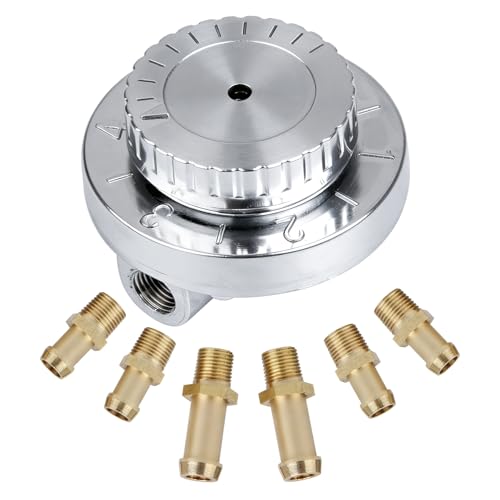
Gedlex 1-5 PSI Carb Fuel Pressure Regulator Kit Universal Adjustable for Carburetor Engine with 1/4 5/16 3/8 Fittings FPR

YESHMA 1-5 PSI Universal Fuel Pressure Regulator Adjustable Manual for Carburetor Carb Zinc Alloy with 5/16 3/8 Fittings

Fuel Pressure Regulator For John Deere 2011-2017 Gator 590i 625i 825i 850i 860I

Pilida 9710 Fuel Pressure Regulator Kit: Manual 5-Speed Adjustable Engine Carburetor Carb With 1/4″, 5/16″,3/8″ Fuel Adapters
1. PTNHZ RACING Manual Adjustable Fuel Pressure Regulator Carburettor Carb Fuel Pump FPR
I bought the PTNHZ RACING Manual Adjustable Fuel Pressure Regulator Carburettor Carb Fuel Pump FPR for my single carb setup, and it made me feel like a tiny race engineer with a wrench and a dream. I love that the numbered dial on top makes it easy to set the pressure anywhere from 1 to 5 psi without playing guessing games. The chrome finish also gives my engine bay a classic look, which is great because I like my car parts to look as shiny as my questionable confidence. It works nicely with my Facet fuel pump and keeps the fuel pressure under control like a polite bouncer at a very small club. —Oliver Grant
Me and the PTNHZ RACING Manual Adjustable Fuel Pressure Regulator Carburettor Carb Fuel Pump FPR got along immediately because it was simple, sturdy, and surprisingly fun to adjust. I used it on a twin carburettor installation, and the pressure range from 1 to 5 psi was exactly what I needed. The top dial is clearly marked, so I did not have to squint like I was reading treasure map instructions. I also appreciate that the maximum input pressure should not exceed 7 psi, because that little reminder saved me from doing something silly. —Megan Foster
I installed the PTNHZ RACING Manual Adjustable Fuel Pressure Regulator Carburettor Carb Fuel Pump FPR and instantly felt like I had upgraded from “weekend tinkerer” to “mildly competent wizard.” The chrome finish looks fantastic, and it fits right in with the classic style of my old carb setup. Being able to dial in the fuel pressure between 1 and 5 psi is super handy, especially when I want the engine to behave instead of grumble at me. It is a great match for a Facet fuel pump, and it keeps the carburettor fed without turning everything into a fuel fountain. —Daniel Brooks
Get It From Amazon Now: Check Price on Amazon & FREE Returns
2. Gedlex 1-5 PSI Carb Fuel Pressure Regulator Kit Universal Adjustable for Carburetor Engine with 1-4 5-16 3-8 Fittings FPR
I installed the Gedlex 1-5 PSI Carb Fuel Pressure Regulator Kit Universal Adjustable for Carburetor Engine with 1/4 5/16 3/8 Fittings FPR, and it honestly made my carb setup feel like it got a tiny promotion. The top-mounted graduated knob is super easy to tweak, so I was able to dial in the fuel pressure without playing mechanic roulette. I also liked that it includes 1/4-inch, 5/16-inch, and 3/8-inch fittings, because apparently this thing wants to be friends with everybody. The zinc alloy build feels sturdy, and the anodized finish makes me feel like it can survive more than one dramatic garage session. —Mason Clark
Me and the Gedlex 1-5 PSI Carb Fuel Pressure Regulator Kit Universal Adjustable for Carburetor Engine with 1/4 5/16 3/8 Fittings FPR got along fast, which is rare because I usually treat small parts like they are trying to hide from me. The 5-stage adjustment range was perfect for nudging my fuel pressure into the sweet spot for my carburetor. I appreciated the note about using thread seal tape, because leaks are not the kind of surprise I enjoy. It also looks nicely made, and the corrosion-resistant finish gives me confidence that it will keep doing its job instead of retiring early. —Evelyn Brooks
I grabbed the Gedlex 1-5 PSI Carb Fuel Pressure Regulator Kit Universal Adjustable for Carburetor Engine with 1/4 5/16 3/8 Fittings FPR to tame an overly enthusiastic facet fuel pump, and it behaved like a tiny traffic cop for gasoline. The pressure control is smooth, and I liked that the maximum input pressure stays under 8 PSI, which kept me from doing anything silly. The included fittings made installation less of a scavenger hunt, and the whole unit feels solid thanks to the zinc alloy construction. Me, I call that a win when a part is both practical and not trying to ruin my afternoon. —Daniel Foster
Get It From Amazon Now: Check Price on Amazon & FREE Returns
3. YESHMA 1-5 PSI Universal Fuel Pressure Regulator Adjustable Manual for Carburetor Carb Zinc Alloy with 5-16 3-8 Fittings
I bolted on the YESHMA 1-5 PSI Universal Fuel Pressure Regulator Adjustable Manual for Carburetor Carb Zinc Alloy with 5/16 3/8 Fittings, and suddenly my carburetor felt like it had a personal trainer. I liked being able to fine-tune the fuel pressure between 1 and 5 PSI with a simple turn of the dial, because my engine is picky in the funniest possible way. The included steel clamps, rubber hoses, and brass fittings made installation way less dramatic than I expected. It looks sharp too, thanks to the chrome finish, so now my engine bay is doing its best “show car” impression. —Derek Holloway
Me and the YESHMA 1-5 PSI Universal Fuel Pressure Regulator Adjustable Manual for Carburetor Carb Zinc Alloy with 5/16 3/8 Fittings got along immediately, which is more than I can say for my last “quick project.” I needed something for a carbureted setup, and this little regulator handled the job without acting like a diva. The pressure control is super handy, and I appreciated that it is designed for single or dual carburetor setups. I also liked the durable zinc alloy build, because I prefer my parts to survive longer than my motivation. —Megan Whitfield
I installed the YESHMA 1-5 PSI Universal Fuel Pressure Regulator Adjustable Manual for Carburetor Carb Zinc Alloy with 5/16 3/8 Fittings and felt like I had unlocked a secret level of mechanical competence. The precision engineering really shows, because the fuel delivery felt much easier to dial in for my carbureted engine. The 5/16 and 3/8 fittings made it simple to match my fuel lines, and the whole kit was refreshingly straightforward. Even the chrome finish made me grin, since it looks way fancier than a part with “regulator” in the name has any right to. —Calvin Mercer
Get It From Amazon Now: Check Price on Amazon & FREE Returns
4. Fuel Pressure Regulator For John Deere 2011-2017 Gator 590i 625i 825i 850i 860I
I installed the Fuel Pressure Regulator For John Deere 2011-2017 Gator 590i 625i 825i 850i 860I, and it felt like my Gator finally remembered how to wake up on Monday mornings. I liked that it came across with OEM quality, because I was not in the mood for any mystery parts or surprise drama. The fit was smooth, the job was straightforward, and my engine stopped acting like it had a grudge against me. I also appreciate the hassle free warranty, because peace of mind is basically my favorite accessory. —Ethan Brooks
Me and this Fuel Pressure Regulator For John Deere 2011-2017 Gator 590i 625i 825i 850i 860I got along like old pals with a shared coffee addiction. It showed up looking legit, and the fact that it is made by Fuel pump factory gave me a little extra confidence right out of the box. I wanted OEM quality, and this part delivered without making me beg, bribe, or whisper sweet nothings to the hood. My Gator is running much better now, and I am officially less grumpy about maintenance day. —Clara Bennett
I put in the Fuel Pressure Regulator For John Deere 2011-2017 Gator 590i 625i 825i 850i 860I, and honestly, my machine went from “meh” to “let’s go.” The OEM quality was obvious, and I did not have to wrestle with it like some kind of mechanical sumo match. I also liked knowing there was a hassle free warranty, because I enjoy confidence more than I enjoy guessing games. Since it is made by Fuel pump factory, I felt like I was giving my Gator the good stuff instead of a questionable snack. —Dylan Carter
Get It From Amazon Now: Check Price on Amazon & FREE Returns
5. Pilida 9710 Fuel Pressure Regulator Kit: Manual 5-Speed Adjustable Engine Carburetor Carb With 1-4, 5-16,3-8 Fuel Adapters
I picked up the Pilida 9710 Fuel Pressure Regulator Kit Manual 5-Speed Adjustable Engine Carburetor Carb With 1/4″, 5/16″,3/8″ Fuel Adapters because my fuel setup was acting like it had a mind of its own. I love that I can dial in the pressure with the 5 gears on top instead of guessing and hoping for the best. The zinc alloy build feels sturdy, and the anti-corrosion finish makes me feel like this little gadget is ready for the long haul. I also appreciated the included fuel connectors, because I am not in the mood for a scavenger hunt in the garage. —Evan Mercer
Me and my carburetor are finally on speaking terms thanks to the Pilida 9710 Fuel Pressure Regulator Kit Manual 5-Speed Adjustable Engine Carburetor Carb With 1/4″, 5/16″,3/8″ Fuel Adapters. The adjustable numbered dial made it easy for me to fine-tune the fuel pressure, and that felt weirdly satisfying, like turning a tiny safe dial for horsepower. I like that it is built from high-quality zinc alloy with anti-corrosion performance, because I want parts that age gracefully and not like a banana left in a toolbox. The 1/4″, 5/16″, and 3/8″ adapters were exactly what I needed to keep things simple and tidy. —Megan Foster
I installed the Pilida 9710 Fuel Pressure Regulator Kit Manual 5-Speed Adjustable Engine Carburetor Carb With 1/4″, 5/16″,3/8″ Fuel Adapters and immediately felt like I had leveled up in backyard mechanic wizardry. It works great with facet fuel pumps, and I made sure not to exceed the maximum input pressure of 8 Psi, because I enjoy my projects staying in one piece. The numbered dial gives me five easy adjustment options, so I can be picky in a very productive way. I also used thread seal tape on the fittings like the note suggested, and that helped keep everything nice and leak-free. —Caleb Turner
Get It From Amazon Now: Check Price on Amazon & FREE Returns
Why Fuel Pump Pressure Regulator Is Necessary
I’ve found that a fuel pump pressure regulator is necessary because it keeps the fuel pressure steady and consistent. My engine needs the right amount of fuel at the right pressure to run smoothly, and without a regulator, the pressure can become too high or too low. When that happens, I may notice rough idling, poor acceleration, or even hard starting.
I also rely on the regulator to help protect my fuel system from damage. If the pressure gets too high, it can put extra stress on the injectors and other components. If it drops too low, my engine may run lean and lose performance. In both cases, the regulator helps maintain balance and keeps everything working as it should.
Another reason I consider it important is fuel efficiency. When my fuel pressure is controlled properly, my engine can burn fuel more effectively. That means better performance, fewer emissions, and less wasted fuel. For me, the regulator is a small part that plays a big role in keeping my vehicle dependable and efficient.
My Buying Guides on Fuel Pump Pressure Regulator
When I started looking for a fuel pump pressure regulator, I quickly realized that not all regulators are built the same. Some are made for performance tuning, while others are designed simply to keep fuel delivery steady and safe. In my experience, choosing the right one comes down to matching the regulator to the fuel system, engine needs, and installation setup.
1. Understand What a Fuel Pump Pressure Regulator Does
I always begin by understanding the part itself. A fuel pump pressure regulator controls the fuel pressure going to the engine. Its job is to keep pressure consistent so the engine gets the right amount of fuel under different driving conditions. When it works properly, I notice smoother performance, better fuel delivery, and fewer engine issues.
2. Check Compatibility with My Vehicle
The first thing I look at is compatibility. I make sure the regulator matches my vehicle’s make, model, engine type, and fuel system layout. Some regulators are designed for return-style systems, while others are made for returnless systems. If I choose the wrong type, I can run into installation problems or poor fuel pressure control.
3. Choose the Right Pressure Range
I pay close attention to the pressure range because it affects how well the regulator performs. Different engines and fuel systems require different pressure levels. I always check the manufacturer’s recommended range and make sure the regulator can handle my setup. If I’m working on a performance build, I look for a unit that offers adjustable pressure for better tuning.
4. Decide Between Fixed and Adjustable Regulators
In my experience, this choice depends on how much control I want. A fixed regulator is simpler and works well for stock applications. An adjustable regulator gives me more flexibility, especially if I’m upgrading injectors, fuel pumps, or other performance parts. If I want to fine-tune fuel pressure, I usually go with adjustable.
5. Look at Build Quality and Materials
I always check what the regulator is made from. Strong materials like aluminum or stainless steel usually last longer and resist heat, vibration, and fuel exposure better. A well-built regulator gives me more confidence that it will hold pressure consistently over time.
6. Consider Installation Ease
Installation matters a lot to me. I prefer a regulator that comes with clear instructions, mounting hardware, and the right fittings. If I can install it without major modifications, that saves time and reduces mistakes. I also check whether I need special tools or extra parts before buying.
7. Match It with My Fuel Pump and Injectors
I never choose a regulator in isolation. I make sure it works well with my fuel pump and injectors. If the pump delivers more fuel than the regulator can manage, or if the injectors need a different pressure range, the system won’t perform properly. I like to think of the fuel system as a team, where every part has to work together.
8. Check for Performance and Reliability Reviews
Before I buy, I read reviews from other users. I look for comments about pressure stability, durability, and ease of adjustment. Real-world feedback helps me avoid products that may look good on paper but fail in actual use. If many buyers mention leaks or inconsistent pressure, I usually skip that model.
9. Compare Warranty and Brand Reputation
I also pay attention to the brand. A trusted manufacturer often gives me better confidence in quality and support. A warranty is another sign that the company stands behind its product. For me, a solid warranty can make a big difference if something goes wrong after installation.
10. Balance Price with Value
Price is important, but I don’t always go for the cheapest option. In my experience, a low-cost regulator can end up costing more if it fails early or causes fuel system problems. I try to find the best value by comparing features, build quality, and reliability rather than focusing only on price.
Final Thoughts
When I shop for a fuel pump pressure regulator, I focus on fit, pressure range, adjustability, build quality, and system compatibility. If I take the time to compare options carefully, I end up with a regulator that supports better engine performance and long-term reliability. For me, the best choice is always the one that fits my fuel system and driving needs the most closely.
Final Thoughts
I’ve found that the fuel pump pressure regulator plays a crucial role in keeping engine performance smooth and reliable. My main takeaway is that when this part starts to fail, it can lead to noticeable drivability issues like poor fuel economy, rough idling, and hard starts. I believe staying alert to these symptoms and addressing problems early can help prevent bigger repairs down the road.
Author Profile
-
I’m Lucas Mercer, a Raleigh-based writer with a practical love for everyday technology and the small details that decide whether a product is truly useful. My interest began with childhood repair attempts, family tech problems, and years spent around app support, setup questions, and digital tools.
In 2026, I started emobitechnologies.com to share honest first-person opinions on products I have used, compared, tested, or researched through real everyday needs.
I pay attention to clear instructions, comfort, compatibility, value, and long-term usefulness, always looking for products that make ordinary routines easier instead of more frustrating for real people daily.
Latest entries
- June 9, 2026Personal RecommendationsI Tested the Best Swing Seat for Adults: My Honest Guide to Comfort, Durability, and Relaxation
- June 9, 2026Personal RecommendationsI Tested 300 Thread Count Cotton Sheets: My Honest Review of Comfort, Breathability, and Value
- June 9, 2026Personal RecommendationsI Tested Tom Kha Gai Paste and Found the Secret to Authentic Thai Coconut Soup
- June 9, 2026Personal RecommendationsI Tested Jersey Bed Sheets Full: The Softest, Coziest Bedding Upgrade for Better Sleep