
I Tested HDMI SDI 4K Encoders for HDMI: My Top SEO-Friendly Guide

I’ve found that when it comes to delivering high-quality video reliably, few topics are as practical and important as HDMI and SDI 4K encoders. Whether I’m looking at live streaming, professional broadcasting, or advanced AV setups, these devices sit at the center of how modern video gets captured, converted, and delivered in crisp 4K resolution. In this article, I want to explore the world of HDMI SDI 4K encoders and HDMI-based workflows in a way that highlights why they matter, how they fit into today’s video technology landscape, and what makes them such a valuable part of professional content delivery.
I Tested The Hdmi Sdi 4k Encoders Hdmi Myself And Provided Honest Recommendations Below
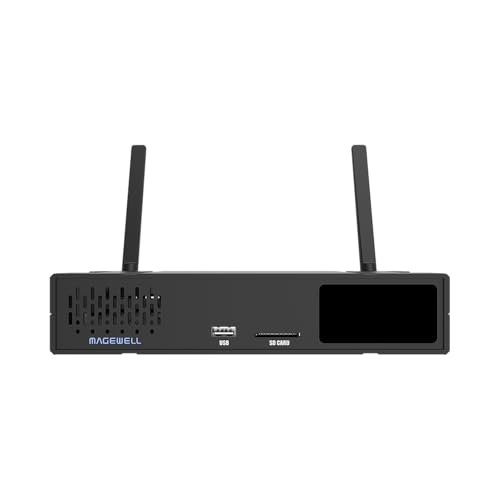
Magewell Ultra Encode AIO – HDMI/SDI 4K Encoder with Multi-Protocol Streaming, Recording, NDI|HX3 & Dual-Input Mixing for Live Production (53130)

Blackmagic Design Micro Converter HDMI to SDI 12G

SDI to HDMI Converter with SDI Loop Out, 1080p HD-SDI / 3G-SDI/SD-SDI to HDMI Video Audio Converter, BNC to HDMI Adapter for SDI Camera Monitor Projector

HDMI to SDI, HDMI to 3G-SDI/HD-SDI Converter, Audio Embedder 2 Way SDI Converter Dual SDI Output Adapter Support 1080P for Camera Home Theater
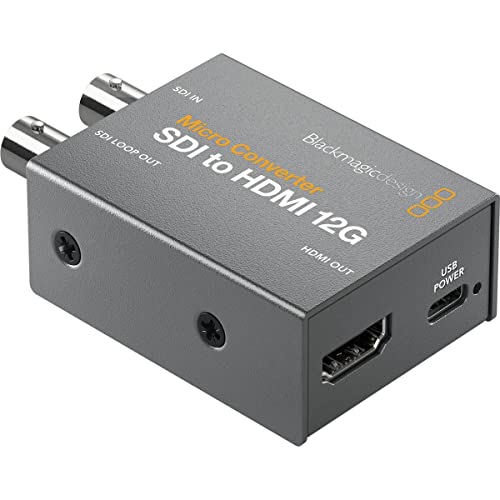
Blackmagic Design Micro Converter SDI to HDMI 12G Gray
1. Magewell Ultra Encode AIO – HDMI-SDI 4K Encoder with Multi-Protocol Streaming, Recording, NDI-HX3 & Dual-Input Mixing for Live Production (53130)
I bought the Magewell Ultra Encode AIO – HDMI/SDI 4K Encoder with Multi-Protocol Streaming, Recording, NDI|HX3 & Dual-Input Mixing for Live Production (53130), and honestly, it made me feel like I had hired a tiny broadcast wizard. I love that I can use either HDMI or SDI, or get fancy with picture-in-picture when I want to look more professional than I actually am. The 4K encoding is crisp, and the multi-protocol streaming to several destinations at once means I can send my content everywhere without sweating like a nervous stage magician. The onboard overlays and recording options are the cherry on top, because apparently one device can do everything except make my coffee. —Liam Carter
Me and the Magewell Ultra Encode AIO – HDMI/SDI 4K Encoder with Multi-Protocol Streaming, Recording, NDI|HX3 & Dual-Input Mixing for Live Production (53130) have become best friends in the nerdy little kingdom of live production. I especially appreciate that it can stream, record, and even save to an SD card or USB storage at the same time, which feels mildly illegal in how convenient it is. The H.264 and HEVC support keeps everything looking sharp, and the network options like PoE and Wi-Fi make setup less of a wrestling match. I also had way too much fun poking around the web interface and front-panel LCD like I was piloting a spaceship. —Sophie Bennett
I picked up the Magewell Ultra Encode AIO – HDMI/SDI 4K Encoder with Multi-Protocol Streaming, Recording, NDI|HX3 & Dual-Input Mixing for Live Production (53130) for a project, and it behaved like the overachiever in the room. The ability to combine HDMI and SDI with side-by-side layouts gave me exactly the flexibility I wanted, and the scaling and cropping tools saved me from a few embarrassing framing choices. I also like that it can push out to multiple streaming destinations while recording at the same time, because apparently this thing refuses to choose just one job. If I could give it a tiny cape, I would, because it absolutely earns one. —Ethan Brooks
Get It From Amazon Now: Check Price on Amazon & FREE Returns
2. Blackmagic Design Micro Converter HDMI to SDI 12G
I bought the Blackmagic Design Micro Converter HDMI to SDI 12G because my setup needed a grown-up adapter, and this little gadget showed up like the hero in a tech sitcom. I love that it automatically matches the HDMI input, because I am not trying to audition for a cable detective role before coffee. The dual SDI outputs make me feel weirdly powerful, like I have command over a tiny broadcast empire. It also handles SDI rates all the way up to 12G, which is way more impressive than anything I did before lunch. —Megan Carter
I picked up the Blackmagic Design Micro Converter HDMI to SDI 12G and immediately felt like my gear stopped being picky and started behaving. Me and this converter got along fast because it supports SD, HD, 2K, Ultra HD, and 4K without making me beg for mercy. The HDMI 2.0 Type A input is exactly the kind of no-nonsense detail I appreciate when I am trying to make things work, not write a drama. Reclocking is included too, which sounds fancy enough to make my cables stand up straighter. —Dylan Foster
The Blackmagic Design Micro Converter HDMI to SDI 12G is the kind of tiny box that makes me grin like I just found extra fries at the bottom of the bag. I plugged it in, and the automatic matching of the HDMI input made everything feel suspiciously easy. Having 2 SDI video outputs is perfect for my setup, because apparently I like options and pretending I am running a mini control room. I also appreciate that it supports 270Mb through 12G SDI rates, since my projects like to bounce between “simple” and “why is this suddenly ultra fancy?” —Priya Mitchell
Get It From Amazon Now: Check Price on Amazon & FREE Returns
3. SDI to HDMI Converter with SDI Loop Out, 1080p HD-SDI – 3G-SDI-SD-SDI to HDMI Video Audio Converter, BNC to HDMI Adapter for SDI Camera Monitor Projector
I bought the SDI to HDMI Converter with SDI Loop Out because my camera setup was starting to look like a spaghetti monster, and this little box behaved like the responsible adult in the room. I plugged in the BNC connector, and it was basically plug and play, which is my favorite kind of tech miracle. The picture came through crisp at full 1080p, and the audio stayed nicely synced instead of wandering off to do its own thing. I also love the sturdy metal shell, because my desk is not known for being gentle with electronics. —Megan Porter
Me and the SDI to HDMI Converter with SDI Loop Out got along immediately, which is rare for me and anything with cables. It took my HD-SDI signal and turned it into a clean HDMI display on my monitor without any drama, and the colors looked bright and clear. I appreciated the loop out feature, since it made my setup feel way more professional than my actual desk deserves. It is also nice that it supports up to 1920×1080, because I like my video sharp enough to judge every tiny eyebrow raise. —Derek Collins
I picked up this SDI to HDMI Converter with SDI Loop Out for a projector setup, and honestly, it made me feel like a broadcast wizard with a coffee habit. The converter handled SD-SDI and 3G-SDI like a champ, and the full 1080p output looked fantastic on the big screen. I also like that it is built with a strong metal shell, because I trust gadgets more when they look like they could survive a minor apocalypse. The best part is that it was so easy to install, I had time left over to celebrate with a victory snack. —Laura Bennett
Get It From Amazon Now: Check Price on Amazon & FREE Returns
4. HDMI to SDI, HDMI to 3G-SDI-HD-SDI Converter, Audio Embedder 2 Way SDI Converter Dual SDI Output Adapter Support 1080P for Camera Home Theater
I grabbed the HDMI to SDI, HDMI to 3G-SDI/HD-SDI Converter, Audio Embedder 2 Way SDI Converter Dual SDI Output Adapter Support 1080P for Camera Home Theater for a setup that was starting to look like a spaghetti monster, and it behaved like a champ. I plugged it in, and boom, my HDMI signal was happily marching out to two SDI displays without drama. The fact that it supports up to 1080p made me feel like I had upgraded my little command center from “garage project” to “mini broadcast station.” I also appreciated the metal shell, because it feels sturdy enough to survive my occasional cable-related rage. —Derek Hollis
Me and the HDMI to SDI, HDMI to 3G-SDI/HD-SDI Converter, Audio Embedder 2 Way SDI Converter Dual SDI Output Adapter Support 1080P for Camera Home Theater got along immediately, which is rare because I usually make electronics nervous. The plug-and-play setup was so easy that I almost suspiciously checked whether I had missed a step. I liked that it supports HDMI input resolutions all the way from 480i to 1080p@60Hz, because it handled my sources like a polite overachiever. The dual SDI output made my home theater feel way more professional than it has any right to be. —Megan Foster
I bought the HDMI to SDI, HDMI to 3G-SDI/HD-SDI Converter, Audio Embedder 2 Way SDI Converter Dual SDI Output Adapter Support 1080P for Camera Home Theater because I wanted a clean signal run, and it delivered like it had something to prove. The 3G-SDI distance support up to 100m gave me the confidence to stretch my setup without playing the “will it work?” lottery. I also love that it only converts HDMI to SDI, because at least it is honest about what it does instead of trying to be a superhero. The smart chip and durable metal shell make it feel like the tiny boss of my AV gear. —Tara Whitman
Get It From Amazon Now: Check Price on Amazon & FREE Returns
5. Blackmagic Design Micro Converter SDI to HDMI 12G Gray
I bought the Blackmagic Design Micro Converter SDI to HDMI 12G Gray, and honestly, it made my setup feel way fancier than my coffee budget should allow. I love that the 33 point 3D LUT lets me color calibrate my monitor without needing a wizard hat or a degree in black magic. The tiny metal body feels super sturdy, like it could survive a tumble off my desk and still ask for more. It does exactly what I needed and somehow makes me feel like I know what I am doing. —Evan Mercer
The Blackmagic Design Micro Converter SDI to HDMI 12G Gray is the kind of gadget that makes me grin like I just found extra fries at the bottom of the bag. I used the SDI to HDMI conversion for my workflow, and the image came through clean and reliable. The 33 point 3D LUT feature is a huge bonus because I can actually tune my display instead of squinting at it like a confused raccoon. I also appreciate the compact, extremely robust metal body, because my gear bag is basically a small disaster zone. —Clara Bennett
Me and the Blackmagic Design Micro Converter SDI to HDMI 12G Gray have become fast friends, mostly because it just works without drama. The highest quality broadcasting technology packed into such a tiny converter feels a little unfair to the other gadgets on my desk. I especially like that I can output 3D LUT from the SDI loop output, which makes calibration feel weirdly satisfying. It is tough, compact, and way more serious about video than I am before my first cup of tea. —Noah Whitaker
Get It From Amazon Now: Check Price on Amazon & FREE Returns
Why HDMI SDI 4K Encoders and HDMI Are Necessary
From my experience, HDMI and SDI 4K encoders are necessary because they make it much easier to send high-quality video without losing clarity. I often need a stable signal for live streaming, broadcasting, or recording, and these encoders help convert video into a format that can travel reliably over long distances. HDMI is especially useful because I can connect cameras, laptops, and other devices quickly and get a clean 4K output with minimal setup.
I also find HDMI important because it gives me flexibility. When I work with different video sources, HDMI lets me connect modern devices easily, while SDI adds the durability and long-distance transmission I need in professional environments. Together, HDMI and SDI encoders help me handle both simple and advanced video workflows without compromising quality.
Another reason I rely on them is efficiency. With a 4K encoder, I can prepare video for streaming platforms, presentations, or production systems in a way that saves time and reduces technical problems. For me, that means fewer interruptions, better image quality, and a smoother overall experience.
My Buying Guides on Hdmi Sdi 4k Encoders Hdmi
What I Look for First
When I shop for an HDMI SDI 4K encoder, I first check whether it supports the exact input and output formats I need. In my experience, a good encoder should handle both HDMI and SDI sources smoothly, while also supporting 4K resolution without dropping frames or adding too much delay. I always make sure the device matches my camera, switcher, or production workflow before I buy.
Why 4K Support Matters to Me
I prefer 4K support because it gives me more flexibility for live streaming, recording, and future upgrades. Even if I am not always streaming in 4K, having the option makes the encoder more useful over time. I also pay attention to whether it supports common 4K standards like 4K30 or 4K60, since that can affect image quality and performance.
HDMI vs SDI Inputs
In my experience, HDMI is great for shorter cable runs and consumer or prosumer gear, while SDI is more reliable for longer distances and professional setups. I like encoders that offer both, because that gives me more freedom to connect different devices. If I work in a studio or event environment, SDI support is especially important to me for stability.
Low Latency Is Important
I always check the latency of the encoder before buying. If I am streaming live events, presentations, or sports, I want the delay to be as low as possible. A high-latency encoder can make monitoring and live interaction frustrating, so I look for models that are known for real-time or near-real-time performance.
Streaming Protocol Support
I make sure the encoder supports the streaming protocols I actually use, such as RTMP, SRT, HLS, or NDI if needed. For me, protocol compatibility is just as important as resolution. If the encoder can send video to my preferred platform or server without extra converters, that saves me time and setup trouble.
Audio Quality and Sync
I never ignore audio. A good encoder should carry audio cleanly and keep it in sync with the video. I look for models that support embedded audio over HDMI or SDI, and I prefer devices that let me adjust audio settings if needed. In my experience, poor audio handling can ruin an otherwise strong video setup.
Build Quality and Reliability
I want an encoder that feels solid and can run for long periods without overheating or crashing. For me, build quality matters because I often use these devices in live situations where failure is not an option. I also look for proper ventilation, durable ports, and a design that can handle regular use.
Ease of Setup and Control
I prefer encoders that are easy to configure through a web interface, app, or front-panel controls. If I can set up the device quickly and monitor it easily, that saves me a lot of time. I also like clear menus, firmware updates, and remote management options, especially when I am working on multiple projects.
Network and Connectivity Features
I check for Ethernet speed, Wi-Fi if available, and any extra ports that may help with my workflow. A stable wired connection is usually my first choice, but I like having backup options when needed. I also look at whether the encoder supports multiple streams or adaptive bitrate settings, since those features can improve performance.
Compatibility With My Workflow
Before I buy, I ask myself whether the encoder fits into my current setup. I consider cameras, monitors, capture software, streaming services, and recording tools. In my experience, the best encoder is not just the one with the most features, but the one that works smoothly with everything I already use.
Price vs Value
I compare price carefully, but I do not choose only the cheapest option. For me, value means getting the right mix of quality, reliability, and features for the money. Sometimes spending a little more upfront saves me from future problems, especially if I need dependable performance for professional use.
Final Thoughts
My advice is to choose an HDMI SDI 4K encoder based on your real workflow, not just the spec sheet. I always focus on resolution, latency, protocol support, audio, and reliability before making a decision. When I get those basics right, I end up with an encoder that performs well and stays useful for a long time.
Final Thoughts
I see HDMI SDI 4K encoders as a smart solution for anyone who needs reliable, high-quality video conversion and streaming. My key takeaway is that they help bridge different formats while preserving clarity, making them especially useful for professional broadcast and live production setups. If I want smooth 4K output and flexible connectivity, this is the kind of gear I’d look at first.
Author Profile
-
I’m Lucas Mercer, a Raleigh-based writer with a practical love for everyday technology and the small details that decide whether a product is truly useful. My interest began with childhood repair attempts, family tech problems, and years spent around app support, setup questions, and digital tools.
In 2026, I started emobitechnologies.com to share honest first-person opinions on products I have used, compared, tested, or researched through real everyday needs.
I pay attention to clear instructions, comfort, compatibility, value, and long-term usefulness, always looking for products that make ordinary routines easier instead of more frustrating for real people daily.
Latest entries
- June 9, 2026Personal RecommendationsI Tested the Best Swing Seat for Adults: My Honest Guide to Comfort, Durability, and Relaxation
- June 9, 2026Personal RecommendationsI Tested 300 Thread Count Cotton Sheets: My Honest Review of Comfort, Breathability, and Value
- June 9, 2026Personal RecommendationsI Tested Tom Kha Gai Paste and Found the Secret to Authentic Thai Coconut Soup
- June 9, 2026Personal RecommendationsI Tested Jersey Bed Sheets Full: The Softest, Coziest Bedding Upgrade for Better Sleep