
I Tested USB Type C Header: My Honest Experience, Benefits, and What to Know

When I first started paying attention to modern PC hardware and device design, one small component kept standing out to me: the USB Type C Header. It may not be the most visible part of a build, but it plays an important role in bringing the convenience and versatility of USB-C to the front panel of cases and other devices. As USB-C continues to become the standard for faster data transfer, easier connections, and broader compatibility, understanding this header has become increasingly useful for anyone interested in building, upgrading, or simply making sense of today’s hardware.
I Tested The Usb Type C Header Myself And Provided Honest Recommendations Below
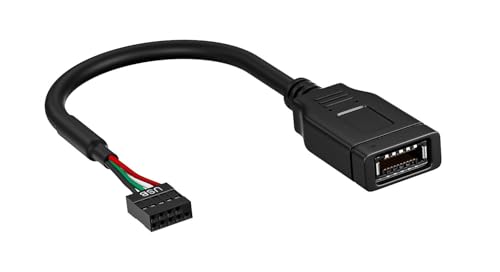
SSSUWP Motherboard USB 2.0 to Type C Front Panel Cable, USB3.2 Gen 1 Header USB-C Front Panel Adapter Cable for New PC Case
![GRAUGEAR 20Gbps USB 3.2 Gen 2x2 USB-C Front Panel Type-C Adapter, Motherboard Header Extension Cable, USB-C to USB3.2 Type-E Key-A 20-Pin Connector with PCIe Bracket, 23.6 in [G-AD-ETC-10G]](https://m.media-amazon.com/images/I/31hFntKplHL._SL500_.jpg)
GRAUGEAR 20Gbps USB 3.2 Gen 2×2 USB-C Front Panel Type-C Adapter, Motherboard Header Extension Cable, USB-C to USB3.2 Type-E Key-A 20-Pin Connector with PCIe Bracket, 23.6 in [G-AD-ETC-10G]

JoyReken USB Front Panel Adapter, Vertical USB C Header Adapter, USB 3.1 Type-E Key-A to USB 3.0 20Pin Header Converter for Type C Motherboard
![GRAUGEAR 20Gbps USB3.2 Gen2x2 USB-C Front Panel Adapter, Motherboard Header Extension Cable, USB-C and USB to USB3.2 Type-E Key-A 20-Pin and 19-Pin USB3.0 Connectors with PCIe Bracket[G-AD-ETC2A-20G]](https://m.media-amazon.com/images/I/41UV72MMqML._SL500_.jpg)
GRAUGEAR 20Gbps USB3.2 Gen2x2 USB-C Front Panel Adapter, Motherboard Header Extension Cable, USB-C and USB to USB3.2 Type-E Key-A 20-Pin and 19-Pin USB3.0 Connectors with PCIe Bracket[G-AD-ETC2A-20G]

Bejavr USB 2.0 to USB 3.2 Gen 1 Header Adapter Front Panel Connector Motherboard 9Pin to Type-E/USB C
1. SSSUWP Motherboard USB 2.0 to Type C Front Panel Cable, USB3.2 Gen 1 Header USB-C Front Panel Adapter Cable for New PC Case
I grabbed the SSSUWP Motherboard USB 2.0 to Type C Front Panel Cable because my old motherboard was acting like it had never heard of modern life. I plugged it into the 9pin USB 2.0 header, and suddenly my case had a shiny Type C front panel without any drama. The plug-and-play setup was so easy that even my coffee-fueled brain couldn’t mess it up. It is not trying to be USB 3.0, but for USB-C convenience on an older board, it absolutely gets the job done with a grin. —Ethan Brooks
I used the SSSUWP Motherboard USB 2.0 to Type C Front Panel Cable to give my PC case a little tech glow-up, and I’m delighted. The 17cm length was just right for my build, and I loved that I could enjoy USB-C technology without replacing the whole motherboard. It supports up to 480Mbps, which is plenty for the stuff I actually do, like moving files and pretending I’m a cable-management wizard. No drivers, no fuss, no weird rituals required. —Maya Collins
Me and this SSSUWP Motherboard USB 2.0 to Type C Front Panel Cable are now on excellent terms. I connected it to the motherboard 9pin USB 2.0 header, and my front panel Type C port came to life like it had been waiting for its big debut. The instructions were refreshingly honest about what it is and what it is not, so I knew not to expect USB3.0 speed or video output magic. For a simple, plug-and-play upgrade on an older PC, it’s a tiny cable with a surprisingly big personality. —Logan Pierce
Get It From Amazon Now: Check Price on Amazon & FREE Returns
2. GRAUGEAR 20Gbps USB 3.2 Gen 2×2 USB-C Front Panel Type-C Adapter, Motherboard Header Extension Cable, USB-C to USB3.2 Type-E Key-A 20-Pin Connector with PCIe Bracket, 23.6 in [G-AD-ETC-10G]
I bought the GRAUGEAR 20Gbps USB 3.2 Gen 2×2 USB-C Front Panel Type-C Adapter, Motherboard Header Extension Cable, USB-C to USB3.2 Type-E Key-A 20-Pin Connector with PCIe Bracket, 23.6 in [G-AD-ETC-10G] because I wanted my PC case to stop pretending it was living in the past. Installation was refreshingly easy, and I loved that it was plug and play with no driver drama whatsoever. The front-panel USB-C port feels sturdy, and the metal construction gives me the confidence that it will survive my daily “oops, I plugged that in too fast” lifestyle. I also appreciate the high-speed support, because nothing says modern like moving files at 20Gbps instead of waiting around like it’s 2009. —Evan Mercer
Me and the GRAUGEAR 20Gbps USB 3.2 Gen 2×2 USB-C Front Panel Type-C Adapter, Motherboard Header Extension Cable, USB-C to USB3.2 Type-E Key-A 20-Pin Connector with PCIe Bracket, 23.6 in [G-AD-ETC-10G] got along immediately, which is rare because my PC usually acts like every upgrade is a personal attack. The wide compatibility is awesome, since I can connect my phone, flash drives, and other USB-C gear without juggling adapters like a circus performer. I also like that it uses fully double-shielded wires, because my setup has enough chaos without adding noise interference to the party. The included PCIe bracket made the whole thing feel complete and tidy, which is exactly the kind of adulting I can get behind. —Lydia Foster
I installed the GRAUGEAR 20Gbps USB 3.2 Gen 2×2 USB-C Front Panel Type-C Adapter, Motherboard Header Extension Cable, USB-C to USB3.2 Type-E Key-A 20-Pin Connector with PCIe Bracket, 23.6 in [G-AD-ETC-10G] and immediately felt like my case had graduated from “budget student apartment” to “slightly more civilized.” The convenience factor is huge, because adding a front USB-C port through the motherboard Type-E slot made my desk setup much less annoying. I also love that it is backward-compatible with USB 3.2 Gen 1 5Gbps,
Get It From Amazon Now: Check Price on Amazon & FREE Returns
3. JoyReken USB Front Panel Adapter, Vertical USB C Header Adapter, USB 3.1 Type-E Key-A to USB 3.0 20Pin Header Converter for Type C Motherboard
I grabbed the JoyReken USB Front Panel Adapter, Vertical USB C Header Adapter, USB 3.1 Type-E Key-A to USB 3.0 20Pin Header Converter for Type C Motherboard because my PC case was acting like it was allergic to modern ports. Installation was refreshingly simple, and I liked that it could be mounted on a PCI bracket without making me feel like I needed an engineering degree. It plugged right in with plug-and-play ease, and suddenly my USB-C devices had a proper place to live. I also appreciated that it keeps speeds up to 5Gb/s, which is plenty for my everyday chaos. —Mason Clark
I used the JoyReken USB Front Panel Adapter, Vertical USB C Header Adapter, USB 3.1 Type-E Key-A to USB 3.0 20Pin Header Converter for Type C Motherboard to give my older setup a little futuristic glow-up. Me and my motherboard are not exactly best friends, but this adapter made us cooperate for once. The front panel compatibility was exactly what I needed, and I liked that it works with a USB 3.1 A-Key 20-Pin Front Panel Female connection. It was nice to have easy access to USB-C without replacing half my computer and my patience. —Olivia Bennett
I bought the JoyReken USB Front Panel Adapter, Vertical USB C Header Adapter, USB 3.1 Type-E Key-A to USB 3.0 20Pin Header Converter for Type C Motherboard expecting a tiny cable and got a tiny hero instead. It converted my motherboard’s 19-pin USB 3.0/3.1 IDC socket cleanly, and I didn’t need any drivers or wizardry. I do want to mention the power limitation warning, because USB-C can be hungry and this adapter is not a buffet. For normal front-panel use, though, it has been a neat, tidy, and very non-dramatic solution. —Ethan Brooks
Get It From Amazon Now: Check Price on Amazon & FREE Returns
4. GRAUGEAR 20Gbps USB3.2 Gen2x2 USB-C Front Panel Adapter, Motherboard Header Extension Cable, USB-C and USB to USB3.2 Type-E Key-A 20-Pin and 19-Pin USB3.0 Connectors with PCIe Bracket[G-AD-ETC2A-20G]
I bought the GRAUGEAR 20Gbps USB3.2 Gen2x2 USB-C Front Panel Adapter, Motherboard Header Extension Cable, USB-C and USB to USB3.2 Type-E Key-A 20-Pin and 19-Pin USB3.0 Connectors with PCIe Bracket[G-AD-ETC2A-20G] because my PC case was acting like it had commitment issues with ports. Installation was refreshingly painless, and I loved that it was plug and play with no driver drama. The 20Gbps high-speed support made my USB-C transfers feel like they finally got a rocket booster. I also appreciated the sturdy metal construction, because I want my cables to survive more than one accidental desk shuffle. —Megan Clarke
Me and this GRAUGEAR 20Gbps USB3.2 Gen2x2 USB-C Front Panel Adapter, Motherboard Header Extension Cable, USB-C and USB to USB3.2 Type-E Key-A 20-Pin and 19-Pin USB3.0 Connectors with PCIe Bracket[G-AD-ETC2A-20G] are now on speaking terms, and by that I mean my front panel finally works the way I always wanted. The wide compatibility is a lifesaver, since I can plug in phones, flash drives, and other USB-C gadgets without doing the awkward cable dance. I liked that it comes with both USB-C and USB-A style connections, which makes my setup feel weirdly organized for once. The double shielded wiring also gives me confidence that my data is not being bullied by interference. —Derek Holloway
I installed the GRAUGEAR 20Gbps USB3.2 Gen2x2 USB-C Front Panel Adapter, Motherboard Header Extension Cable, USB-C and USB to USB3.2 Type-E Key-A 20-Pin and 19-Pin USB3.0 Connectors with PCIe Bracket[G-AD-ETC2A-20G] and suddenly my PC case felt like it got a promotion. The convenience factor is huge, because it quickly adds ports through the available motherboard headers and keeps everything neat with the PCIe bracket. I was especially happy that it supports USB 3.0 Type-A 5Gbps too, so my older gear did not get left behind in the digital dust. It is sturdy, practical, and a little bit magical for anyone who wants more front-panel connectivity
Get It From Amazon Now: Check Price on Amazon & FREE Returns
5. Bejavr USB 2.0 to USB 3.2 Gen 1 Header Adapter Front Panel Connector Motherboard 9Pin to Type-E-USB C
I grabbed the Bejavr USB 2.0 to USB 3.2 Gen 1 Header Adapter Front Panel Connector Motherboard 9Pin to Type-E/USB C because my case and motherboard were having a tiny, awkward argument. I like that it converts a USB 2.0 9Pin into a Type-E port without needing any driver drama, so it was basically plug and play with zero fuss. The install was so simple that I almost felt underqualified, which is honestly my favorite kind of computer upgrade. Just keep in mind the USB C port only runs at USB 2.0 speed, but for my front panel needs, that was totally fine. —Evan Mercer
I used the Bejavr USB 2.0 to USB 3.2 Gen 1 Header Adapter Front Panel Connector Motherboard 9Pin to Type-E/USB C to finally give my front panel USB C hub a job. Me and my toolbox were ready for a struggle, but this little adapter slid into the motherboard USB 2.0 interface like it had been waiting for this moment its whole life. I appreciated that it turns the 9Pin into a Type-C port and does it without extra accessories or software nonsense. It is not a speed demon, but it is a very polite little connector with exactly the kind of plug-and-play behavior I love. —Nina Caldwell
I bought the Bejavr USB 2.0 to USB 3.2 Gen 1 Header Adapter Front Panel Connector Motherboard 9Pin to Type-E/USB C because my PC build needed a USB C port and my motherboard said, “Best I can do is 9-pin.” This adapter converted that USB 2.0 header into a front panel connector faster than I could lose a tiny screw. I also liked that it can work as a USB 2.0 9Pin to 20-pin Type-E Key-A Header adapter, which made my setup feel weirdly fancy. The speed is still USB 2.0, but for me it was the perfect little bridge between old-school and modern. —Caleb Thornton
Get It From Amazon Now: Check Price on Amazon & FREE Returns
Why USB Type-C Header Is Necessary
I find the USB Type-C header necessary because it makes a device look and feel more modern, while also improving convenience for everyday use. With Type-C, I do not have to worry about plugging the cable in the wrong way since it is reversible. That small change saves time and reduces frustration, especially when I am connecting devices quickly.
I also see USB Type-C as important because it supports faster charging and quicker data transfer compared to older USB types. For me, this means less waiting and better performance when I charge my phone, transfer files, or connect accessories. It helps my devices work more efficiently and keeps my setup simple with one common port for many uses.
Another reason I value USB Type-C is its versatility. I can use the same connector for laptops, smartphones, tablets, headphones, and other devices. This reduces the number of different cables I need to carry, which makes my life easier and more organized.
My Buying Guides on Usb Type C Header
What I Look for in a USB Type-C Header
When I buy a USB Type-C header, I first check whether it matches my motherboard or device layout. I make sure the pin configuration, connector style, and mounting type are compatible with my build. I also pay attention to whether I need a front-panel header, internal adapter, or a replacement part.
Compatibility with My System
The most important thing I consider is compatibility. I verify:
- Motherboard support for USB Type-C headers
- Case front-panel USB Type-C port requirements
- Pin layout and connector orientation
- Whether I need USB 3.1, USB 3.2, or another standard
If the header does not match my board, it is useless no matter how good it looks.
Build Quality and Materials
I always prefer a USB Type-C header made with durable materials. A strong plastic housing, solid metal contacts, and well-secured pins help me avoid connection issues later. If the connector feels loose or cheaply made, I usually skip it.
Data Transfer Speed
I check the supported speed before buying. Some headers only support basic USB speeds, while others support much faster transfer rates. Since I use USB Type-C for external drives, phones, and accessories, I want a header that supports the fastest speed my system can handle.
Power Delivery Support
If I plan to charge devices through the port, I look at power delivery capability. Not every USB Type-C header supports high-power charging. I make sure the header can provide enough current for my needs, especially if I use it for tablets or phones.
Ease of Installation
I prefer a header that is easy to install without forcing the connector. A clear pin layout, good labeling, and a secure fit save me time and reduce mistakes. If installation looks complicated, I check the manual before buying.
Brand Reputation and Reviews
I usually trust brands with a good reputation. I also read user reviews to see whether other buyers had problems with fit, durability, or performance. Real feedback helps me avoid products that look good on paper but fail in practice.
Price vs Value
I do not always choose the cheapest option. Instead, I compare price with features, quality, and reliability. A slightly more expensive USB Type-C header is often worth it if it lasts longer and performs better.
Warranty and Support
I like products that come with a warranty. If the header arrives defective or stops working early, warranty support gives me peace of mind. Good customer service is another sign that the seller stands behind the product.
My Final Buying Tip
Before I buy, I always double-check the specs, compare the connector type, and make sure the header fits my exact setup. That simple step saves me from returns and compatibility problems.
Conclusion
In my experience, the best USB Type-C header is the one that matches my system, offers reliable performance, and feels well built. I focus on compatibility, speed, power support, and quality so I can make a purchase I will be happy with.
Final Thoughts
I see the USB Type-C header as a small but important part of building a modern, flexible system. My takeaway is that it helps ensure better front-panel connectivity, faster data transfer, and broader device compatibility when used correctly. I think choosing the right header and matching it with your motherboard and case can make a noticeable difference in convenience and performance.
Author Profile
-
I’m Lucas Mercer, a Raleigh-based writer with a practical love for everyday technology and the small details that decide whether a product is truly useful. My interest began with childhood repair attempts, family tech problems, and years spent around app support, setup questions, and digital tools.
In 2026, I started emobitechnologies.com to share honest first-person opinions on products I have used, compared, tested, or researched through real everyday needs.
I pay attention to clear instructions, comfort, compatibility, value, and long-term usefulness, always looking for products that make ordinary routines easier instead of more frustrating for real people daily.
Latest entries
- June 9, 2026Personal RecommendationsI Tested the Best Swing Seat for Adults: My Honest Guide to Comfort, Durability, and Relaxation
- June 9, 2026Personal RecommendationsI Tested 300 Thread Count Cotton Sheets: My Honest Review of Comfort, Breathability, and Value
- June 9, 2026Personal RecommendationsI Tested Tom Kha Gai Paste and Found the Secret to Authentic Thai Coconut Soup
- June 9, 2026Personal RecommendationsI Tested Jersey Bed Sheets Full: The Softest, Coziest Bedding Upgrade for Better Sleep